For more than four decades, the US photojournalist Paula Bronstein has travelled to places overlooked by the wider world, including countries scarred by war, such as Afghanistan and Ukraine.
Bronstein says her life’s mission has been to “bear witness to critical moments” and to “create images that evoke true empathy in others”.
Her prize-winning photographs document political conflict, humanitarian crises and social injustice. Yet she is equally drawn to the quieter moments of everyday life: to “joy and happiness and the full spectrum of human experience”. She attributes her work to an “insatiable curiosity” and a desire to document people’s “enduring humanity” amid tragedy.
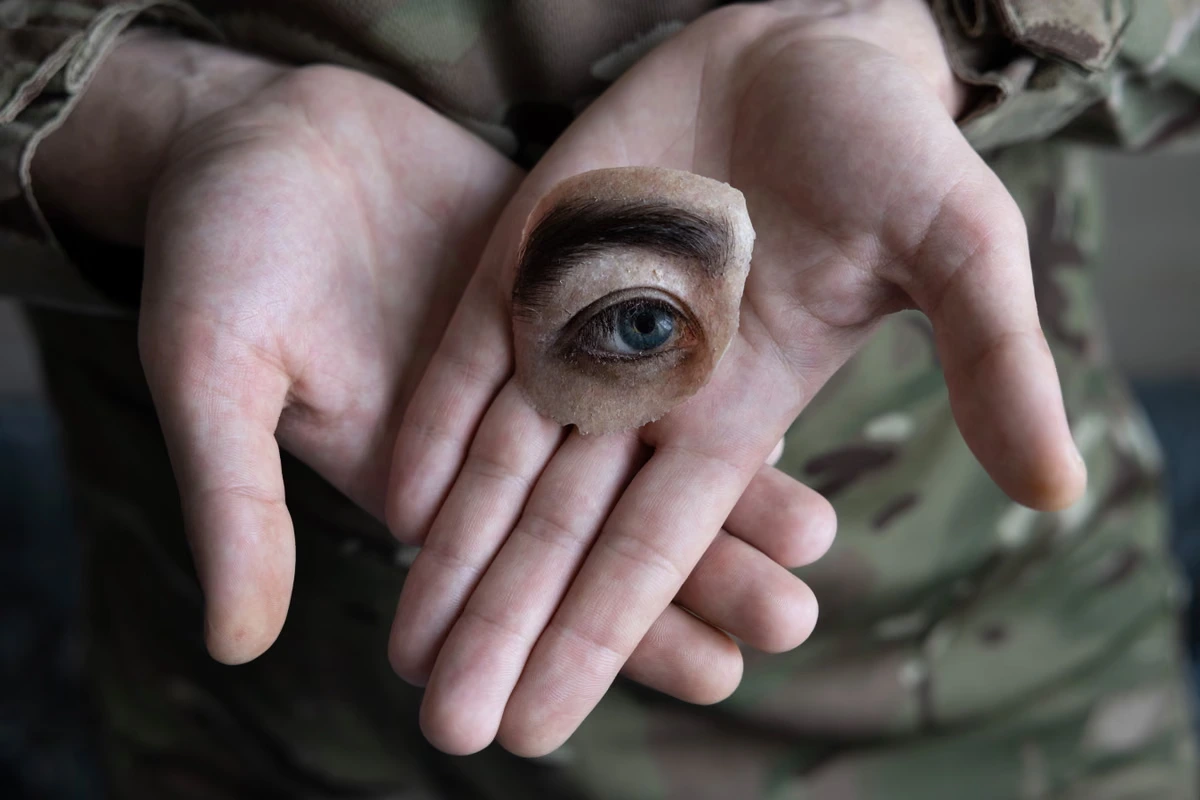
Since 2025, Bronstein has been photographing wounded Ukrainian servicemen for a project, Blinded by War. Vladimir Putin’s 2022 invasion has left a generation of young Ukrainian men with life-changing injuries. Most have been hit by kamikaze drones, used extensively by both sides across a sprawling battlefield.
Ukraine is facing the immense challenge of providing medical care, rehabilitation and psychological support to a growing number of wounded military personnel. The country’s healthcare system is struggling to treat the many soldiers who have sustained vision loss.
Bronstein’s subjects include Artur Martosich, a competitive weightlifter who runs with a guide, and Serhii Chabanov, a father of three who was blinded and lost an arm in a drone attack near the eastern city of Bakhmut. “I learn something from each new story I do. The people in Ukraine are incredible. What fascinates me is their resilience,” she says.
Martosich was shot in the head from three metres while on a combat mission. He lives with his father and describes sport as the “best form of rehabilitation – physical, spiritual and mental”, adding: “Before the war I used to wrestle. My current goal is to make it into the Ukrainian national team for strongman competitions.”
Another soldier, Andriy Onopriienko, 32, was hit two years ago by tank fire. He lost his eyesight and suffered several facial burns and hearing loss in one ear. “I was in so much pain I begged another comrade to kill me. Now I want to live my life to the fullest, one step at a time and to achieve small things every day,” he says. He lives in the Kyiv family apartment where he grew up.
In July, Bronstein visited the Ukrainian capital’s regional hospital, where she photographed patients undergoing eye surgery. One of them, 30-year-old Rafael Akhmedov, lost his left eye in 2024 when a mortar hit him in the Kharkiv region. He was receiving a scleral implant. Last year, the hospital carried out eye operations on 100 soldiers.
“I hope this is my last time here,” Akhemedov says. Asked about his plans for the future, he says: “My wife and I are working on having a kid.” The hospital’s ocular surgeon, Mariia Borkhalenko, says 70% of her patients have lost one or both eyes. “They are victims of FPV drones, bombs, explosions and blast waves.”
Many blinded soldiers also lose their hands. “It’s a reflex. When there is a blast people raise their arms,” Borkhalenko says. While some veterans cope well, others become depressed and “asocial”, she adds. “It’s a big number of people, unfortunately. We have psychologists who talk to them and help them to learn to live without hands and sight.”
In recent months Russia has stepped up its drone and ballistic missile attacks on Kyiv. Many people shelter in basements and metro stations. Borkhalenko says: “I still get up in the morning and go to work. Doing surgery is my job. Our shared goal is to defeat the enemy and win this war.”
Bronstein moves rapidly around the operating theatre, photographing Akhmedov from different angles. She is not squeamish about blood: “I’ve covered conflict for so many years, going back to the horrible bombings in Pakistan, to the war in Afghanistan, and to working in many many hospitals in Kabul. It’s how I want to tell the story.”
She adds: “For me, photography is an intensely personal exploration, seen through my own eyes. I am incredibly fortunate that, at 72, what truly matters is my unwavering passion for my work. I remain deeply curious, always seeking, and profoundly proud to portray what’s possible, even in the darkest corners.”
Bronstein’s latest book is called Witnessing Life: A Retrospective. Her pictures have been published and exhibited globally. She spent 15 years as a staff photographer for US newspapers, before working for Getty Images in Asia from 2002 to 2013. Between 2001 and 2021 she covered the war in Afghanistan. Her book Afghanistan: Between Hope and Fear was published in 2016.
“My life has unfolded as a continuous conversation with photojournalism. I have given myself entirely to it, and in turn, it has profoundly shaped who I am today,” she says.
-
Witnessing Life: A Retrospective by Paula Bronstein will be published in August by MkF éditions