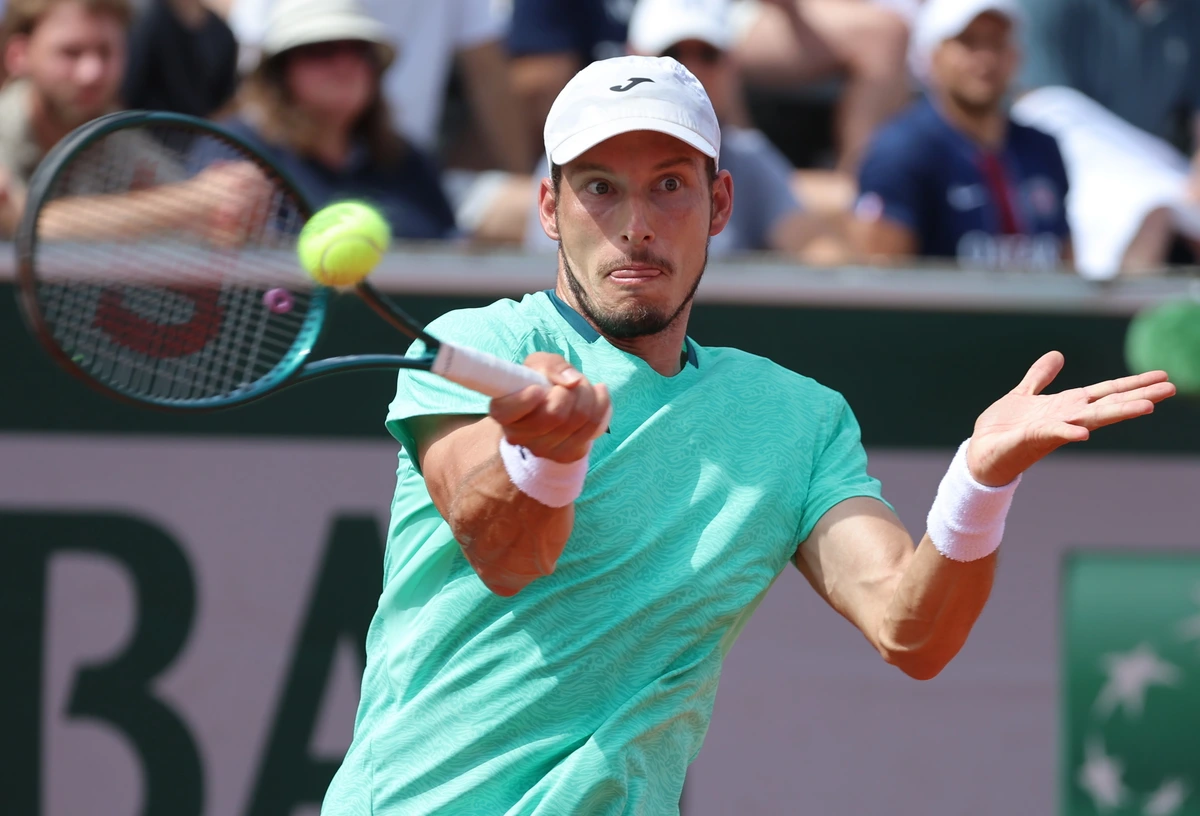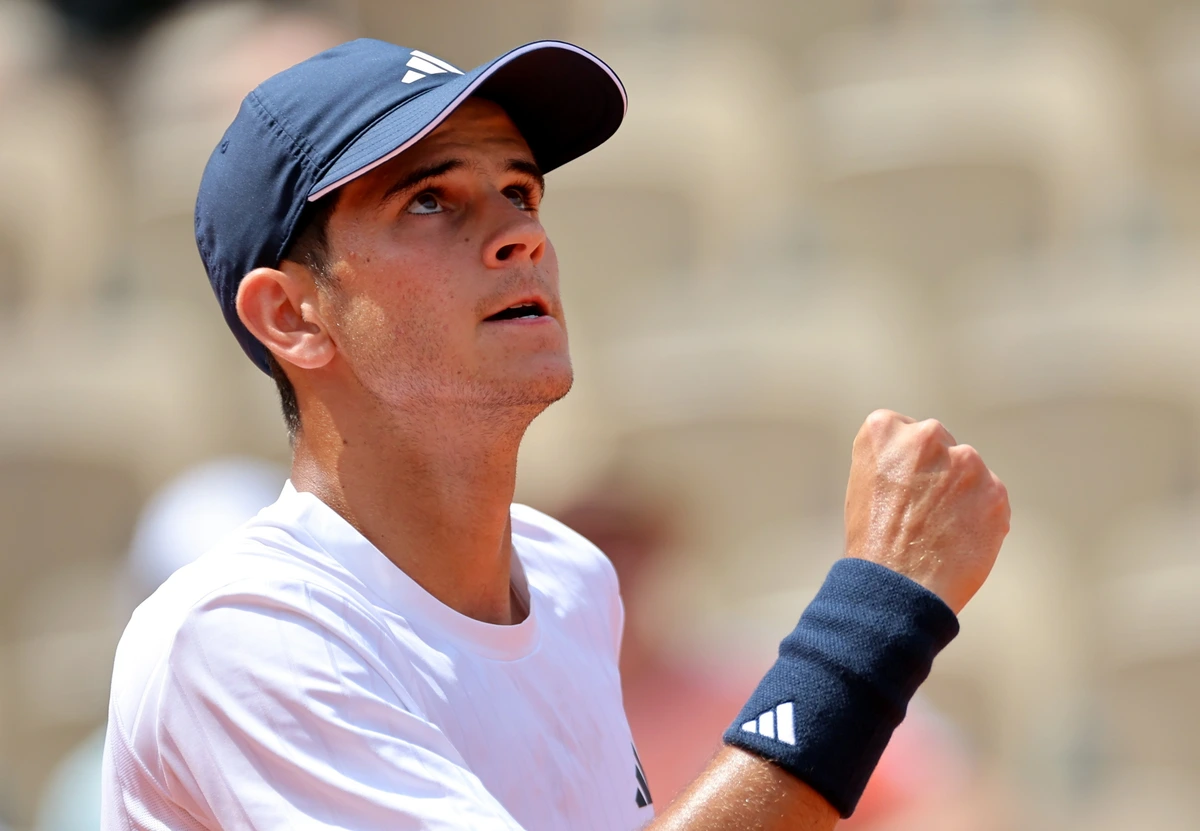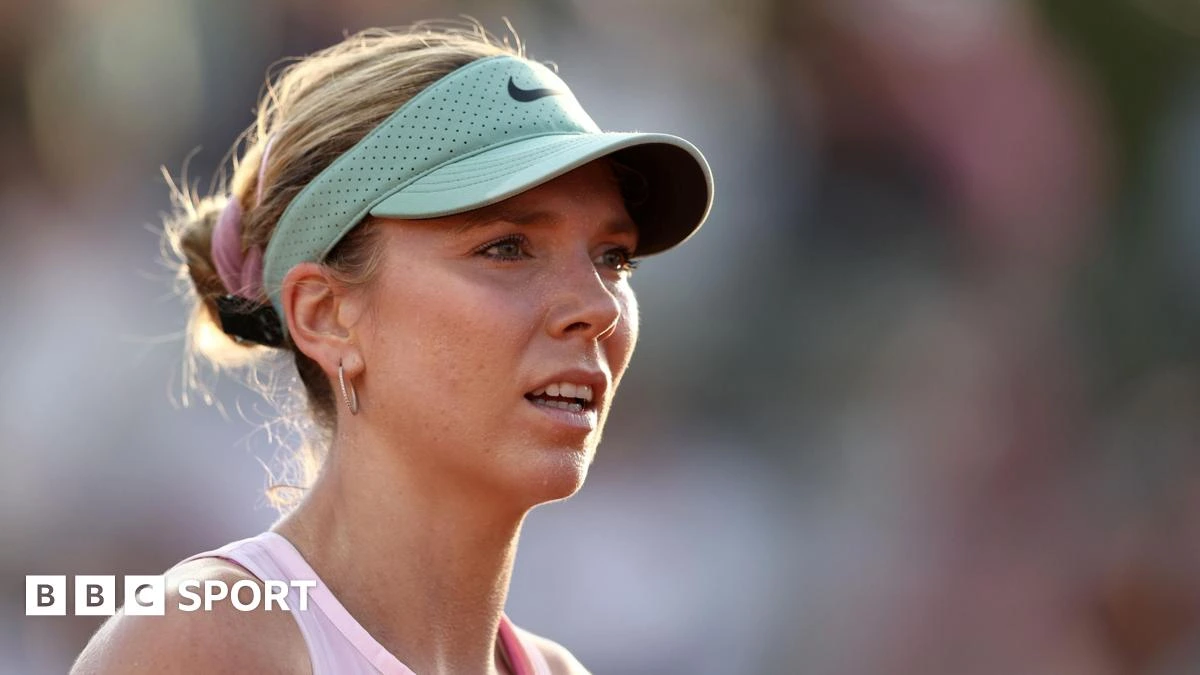
For the third Grand Slam in a row, there will be no British singles players in the second week.
That is not a surprise at the French Open, where the nation's players have historically struggled on clay.
But when the latest rankings are confirmed after Roland Garros, there will only be one British man in the top 100. On the women's side, there will be four.
With Wimbledon around the corner, are the singles struggles becoming a concern for British fans?
"Of course we want more British players in the top 100 and reaching the second weeks of Grand Slams - but we're in a blip at the moment," said former British number one Annabel Croft.
"Tennis moves and changes very quickly. It is a brutal sport and maintaining your level at the top is tough.
"I think the picture looks bleaker than it actually is and I'm sure the British players will bounce back."
Boulter loss means no Brits in singles third round
The day the French Open men's draw blew wide open
What's gone wrong for British players this year?
The lack of British depth at the top of the sport - particularly on the men's side - has been exposed by a raft of injuries.
Five players were given direct access to the French Open main draw because of their ranking, with only Francesca Jones - who grew up playing on clay after moving to Barcelona as a teenager - and Katie Boulter reaching the second round.
Jack Draper, who reached a career high of fourth last year, has barely played since Wimbledon 12 months ago.
The 2024 US Open semi-finalist did not play in Paris because of a knee injury and will leave the top 100 after the French Open.
"It's unlucky with the timing of Jack's injury - a year ago we wouldn't have been having this conversation," Croft said.
"Carlos Alcaraz kept talking about how he was fearful of Jack's game. He had so much momentum, he was pushing the top players.
"We need Jack to be fully fit again."
Jacob Fearnley cracked the top 50 after a meteoric rise, but has fallen outside the top 140 after a rib injury.
Cameron Norrie is the sole British representative in the men's top 100, but the world number 24 retired injured from his French Open first-round match.
On the women's side, Sonay Kartal broke into the top 50 last year but has missed the entire clay-court swing with a back injury.
Jones has endured a tough year after suffering a head injury in the gym, while former US Open champion Emma Raducanu has been set back by a viral infection.
Those defending the state of British tennis would say there were positive trends before injuries and illness took hold.
For example, there were three British players in the WTA top 50 at the same time for the first time since 1986.
"Tennis players tend to play more matches than a lot of other sports," Michael Bourne, the LTA's performance director, said.
"You don't get to substitute in a game of tennis - once you are on, you are on. You don't get to control whether you are out there for three hours or five."
Is Britain developing enough singles talent?
It is hard to dispute the notion that Britain - one of the richest tennis nations in the world - is punching well below its weight.
What constitutes success for British tennis, both now and in the future, has been debated for much of the past two decades.
Is it more Grand Slam singles champions like Andy Murray and Raducanu? More players ranked inside the world's top 100? Or larger participation figures across the country?
"The answer is we strive towards all of these," LTA chief executive Scott Lloyd told BBC Sport in 2024.
"Having Grand Slam champions is no mean feat but having players go deep in the biggest events brings visibility and inspiration for all our tennis fans and player base.
"The more players we have competing in the top 200 helps push our players to be the best they can."
The LTA points to the 23 players ranked between 101 and 300 as a sign of depth.
In April, there were 16 men in the top 250. A decade ago there were only three women and five men in the top 200.
At Roland Garros, there were a record 11 men in qualifying and one in the women's event - although only Toby Samuel managed to reach the main draw.
Men's doubles is one area of the sport where British tennis is undoubtedly envied.
Five British players - Neal Skupski, Henry Patten, Julian Cash, Lloyd Glasspool and Joe Salisbury - are ranked inside the world's top 10 and all have won Grand Slam titles over the past six seasons.
And what about the future? There remains excitement in British tennis circles about the potential of teenagers Mika Stojsavljevic, Hannah Klugman and Mimi Xu.
Nevertheless, it is singles which invariably attracts public attention and acts as a beacon for success.
While the LTA would clearly acknowledge Grand Slam singles results are not as good as they would like, it is believed the governing body is not concerned there is fundamental issue with the nation's player development.
Will picture look rosier after grass swing?
The inquest into the lack of British singles success at the French Open is nothing new and is largely down to a lack of exposure to the clay.
According to the Lawn Tennis Association, there are around 1,300 clay-courts in Great Britain. That is about 5% of the 23,000 total number of courts.
In contrast, about 60% of courts in Spain - one of the leading nations on the surface - are clay.
"Do I think we should try and develop more juniors on clay? Yes. I think it helps the understanding and construction of the game more," Jones said.
The grass courts are where British players tend do better, given it is the surface they have more access to from a younger age.
Giving a host of wildcards to home players throughout the British grass swing is also a crucial development tool.
For players like Oliver Tarvet, who met Alcaraz in the Wimbledon second round last year after receiving a qualifying wildcard, it can be a valuable springboard.
As well as exposure at a higher level, the money earned can be used to finance what is an expensive career.
"I think you'll probably see some people you've never heard of before making deep runs in a lot of big tournaments," Fearnley added.
"All the guys that lose in Paris aree straight on the grass the next day.
"I think the state of British tennis going into grass is probably pretty good."
Related topics
Live scores, results and order of play
Get tennis news sent straight to your phone